
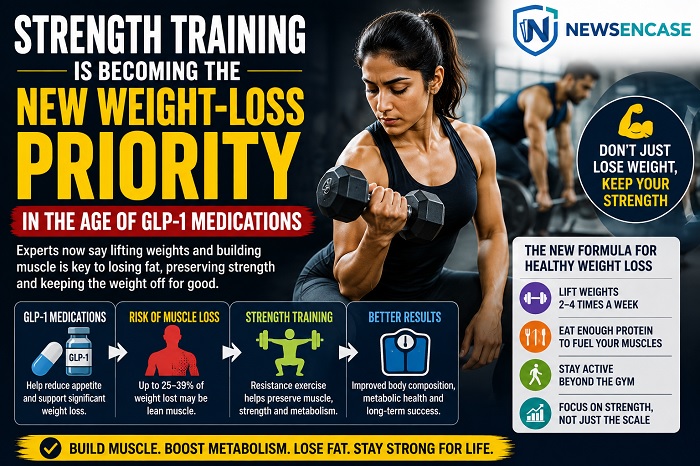
The weight-loss conversation is shifting from simply “How many kilos did you lose?” to “How much muscle did you keep?” As GLP-1-based medications produce substantial weight reductions, researchers and fitness professionals are increasingly emphasizing resistance training, adequate nutrition and body composition as important parts of long-term weight management.
A 2026 systematic review and meta-analysis involving 20 randomized trials and 15,782 participants found that lean mass represented roughly 25% to 39% of total weight lost with several incretin-based treatments. The researchers found a more favorable lean-mass profile when lifestyle intervention incorporated resistance training.
Why Muscle Matters During Weight Loss
Losing weight does not mean losing only body fat. During significant weight reduction, the body can also lose lean tissue, which includes muscle-related tissue.
Muscle is important for much more than appearance. It contributes to strength, mobility, physical function and metabolic health, making preservation particularly important for older adults and people already vulnerable to muscle loss.
This has given rise to the idea of “high-quality weight loss”—reducing excess fat while preserving as much muscle, strength and physical function as possible.
Resistance Training Emerges as Key Strategy
Exercises such as squats, lunges, push-ups, resistance-band movements and weightlifting place muscles under mechanical load, providing the stimulus needed to maintain or increase strength.
A recent evidence review described resistance training as the primary exercise strategy for protecting muscle-related function during substantial pharmacological weight loss, although researchers note that more randomized trials specifically combining newer GLP-1 therapies with structured resistance programs are still needed.
That distinction is important: resistance training is strongly supported during weight loss generally, but scientists are still building the evidence base for exactly which programs work best alongside drugs such as semaglutide and tirzepatide.
GLP-1 Users May Actually Be Exercising Less
One 2026 study presented at the Endocrine Society’s ENDO meeting raised another concern.
Researchers examining activity data found that adults with obesity reduced their physical activity after starting GLP-1 receptor agonist treatment, highlighting the need to intentionally maintain movement while losing weight.
Health professionals therefore increasingly view medication and exercise as complementary rather than competing approaches.
Protein and Strength Training Work Together
Exercise isn’t the only consideration. Adequate dietary protein provides amino acids needed for muscle maintenance and repair.
Recent reviews recommend combining resistance exercise with appropriate protein intake and monitoring of body composition when substantial weight loss is occurring.
Because GLP-1 medications suppress appetite, however, some people may find it harder to consume adequate food and protein. Individual nutritional needs vary, so people taking these medications should discuss diet and exercise changes with their healthcare team rather than following a one-size-fits-all protein target.
The Scale Is No Longer the Whole Story
The growing emphasis on strength training reflects a broader change in obesity care.
A lower number on the scale can be valuable, but clinicians and researchers are increasingly interested in where that weight came from. Losing predominantly excess fat while maintaining muscle and physical capability represents a different outcome from losing large amounts of both fat and lean tissue.
That is why strength, waist circumference, body composition, mobility and metabolic health can provide useful information alongside body weight.
In the GLP-1 era, the emerging fitness message is therefore straightforward: successful weight loss isn’t only about becoming lighter—it is increasingly about becoming healthier while staying strong.
About the Author


