
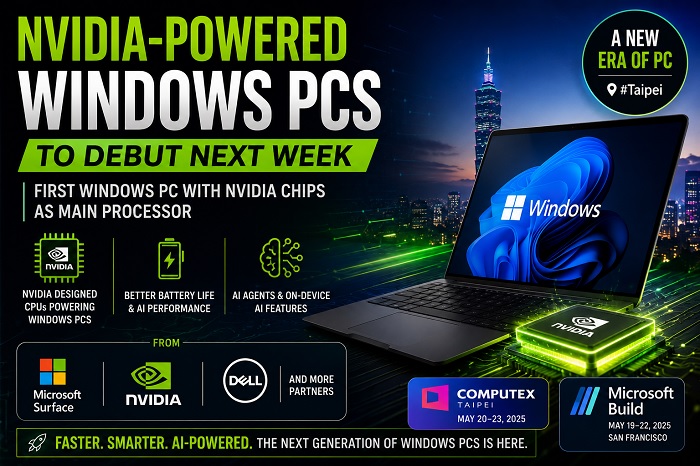
Microsoft and Nvidia are set to unveil the first Windows PCs powered by Nvidia chips as the main processor next week, marking a major shift in the personal computing market and intensifying competition with Apple’s MacBook lineup.
According to reports, the new generation of AI-powered Windows laptops will debut during the Computex trade show in Taiwan and Microsoft’s Build developer conference in San Francisco.
The upcoming devices are expected to include Microsoft Surface models as well as laptops from leading manufacturers such as Dell, making them the first mainstream Windows PCs to use Nvidia-designed processors instead of traditional chips from Intel and AMD.
A Major Push Into AI-Powered Computing
The launch represents a significant milestone for Nvidia as it expands beyond graphics processors and AI accelerators into central processing units for Windows-based computers.
The move also aligns with Microsoft’s broader effort to transition toward Arm-based, power-efficient chips aimed at improving battery life and enabling advanced on-device artificial intelligence features.
Official X accounts of Windows, Nvidia, and Arm teased the upcoming announcement with the tagline “A New Era of PC,” accompanied by coordinates pointing to Taipei, where Computex is scheduled to take place.
Microsoft Targets Apple’s Growing Lead
Microsoft has been working to improve Windows laptops with battery-efficient processors, but previous efforts have yet to create a major sales surge.
Apple has gained significant momentum with its in-house silicon strategy, recently refreshing its MacBook lineup with M5-series chips that offer high performance and superior energy efficiency.
The Nvidia-powered Windows PCs are expected to be Microsoft’s strongest response yet to Apple’s dominance in the premium laptop segment.
Advanced AI Features Expected
In addition to the hardware reveal, Microsoft is reportedly expected to introduce new software tools designed to enable AI agents to perform tasks directly on Windows computers without relying heavily on cloud processing.
This could allow devices to handle AI-powered productivity, automation, and assistance tasks locally, improving speed, privacy, and responsiveness.
Expanding the Windows Arm Ecosystem
Reuters had previously reported Nvidia’s plans to develop Arm-based CPUs for Windows devices.
Currently, Qualcomm is the primary supplier of Arm-based processors for Windows laptops, while Intel and AMD continue to dominate the broader PC processor market.
The Nvidia-Microsoft partnership could significantly reshape the future of Windows computing by offering a new alternative focused on AI performance and battery efficiency.
About the Author