
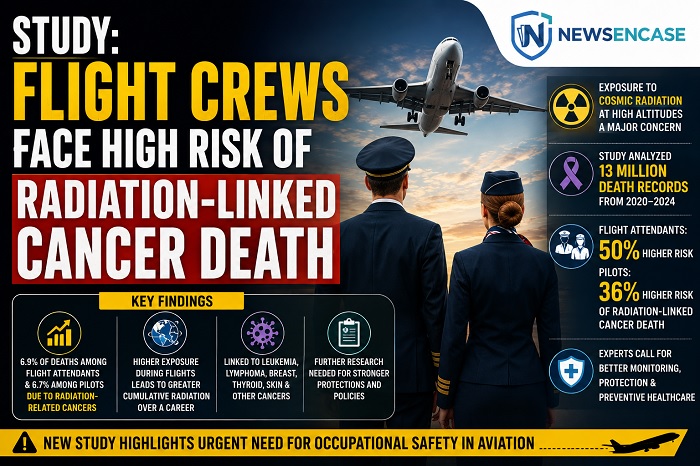
New Delhi: A new study published in JAMA Internal Medicine has raised fresh concerns about the long-term health risks faced by airline pilots and flight attendants, finding that flight crews had the highest proportions of deaths from radiation-related cancers among more than 500 occupational groups studied. The research points to repeated exposure to cosmic ionizing radiation at high altitudes as a possible occupational factor behind the elevated risk.
The study, published online on August 17, analyzed national U.S. death certificate data covering nearly 13 million people who died between 2020 and 2024. Researchers examined information from 503 occupations, including approximately 14,000 pilots and 7,000 flight attendants. They focused on cancers associated with radiation exposure, including leukemia, lymphoma, multiple myeloma, melanoma and cancers of the breast, thyroid, prostate, skin and central nervous system.
Flight Attendants and Pilots Among Highest-Risk Groups
According to the findings, approximately 6.9% of deaths among flight attendants and 6.7% of deaths among pilots were attributed to radiation-related cancers. By comparison, the corresponding figure was about 5% among the broader working population.
Researchers calculated that flight attendants had roughly 50% higher odds of dying from a radiation-related cancer than members of the general working population, while pilots had approximately 36% higher odds. Both groups ranked at the top of the occupational comparison for radiation-linked cancer mortality.
Importantly, the study does not establish that cosmic radiation directly caused individual cancer deaths. Researchers could not measure the exact radiation dose received by each worker from their death records. Other occupational factors, including irregular working hours and disruption of circadian rhythms, may also influence cancer risk. However, the absence of a similar increase in deaths from cancers not considered radiation-related strengthens the researchers’ hypothesis that occupational radiation exposure may play an important role.
Why Are Flight Crews Exposed to More Radiation?
Cosmic radiation originates in space and is partially shielded by Earth’s atmosphere. At commercial cruising altitudes, aircraft and their occupants are exposed to higher levels of this ionizing radiation than people at ground level.
Because pilots and cabin crew spend many hours at high altitude throughout their careers, their cumulative exposure can become substantially greater than that of occasional passengers. According to reporting on the study, aircrew may receive an estimated 3 to 6 millisieverts of cosmic radiation per year, while a frequent passenger taking 10 cross-country round trips annually would receive around 0.4 millisieverts from cosmic radiation.
Previous research has also identified concerns surrounding cancer among aircrew. The U.S. National Institute for Occupational Safety and Health notes that aircrew members are exposed to elevated cosmic ionizing radiation and that studies have reported increased risks for certain cancers, particularly skin and breast cancers. Circadian disruption caused by overnight work and frequent travel across time zones is another area of concern.
Calls for Better Monitoring and Protection
The latest findings are likely to renew discussion about occupational radiation protection for airline crews. In the United States, aviation authorities recognize aircrew as occupationally exposed to ionizing radiation, but pilots and flight attendants are not currently subject to the same federal radiation-dose limits and monitoring requirements that apply to some other radiation-exposed workers.
Experts have called for greater awareness among airlines, regulators and healthcare professionals, along with better monitoring of occupational exposure and appropriate preventive healthcare for long-term aircrew members. A National Academies project is also examining radiation exposure and health outcomes among airplane crews, highlighting continuing scientific and regulatory interest in the issue.
For passengers, however, the findings should not be interpreted as a reason to avoid flying. The study specifically concerns people who spend their working lives at altitude and accumulate substantially more exposure over many years. Researchers and experts emphasize that the issue is primarily an occupational health concern for frequent, long-term aircrew exposure, rather than an indication that ordinary air travel poses a comparable cancer threat.
The new study adds to a growing body of evidence suggesting that aviation workers deserve closer attention to occupational radiation exposure. Further research will be needed to determine the precise contribution of cosmic radiation, work schedules and other factors to cancer risk and to establish whether additional monitoring or preventive measures should be introduced.
About the Author


