New Delhi: Tensions surrounding the Strait of Hormuz have intensified as diplomatic efforts between the United States and Iran remain stalled, raising fresh concerns over global energy supplies, commercial shipping and crude oil prices. The strategically important waterway has become a major flashpoint in the wider Iran conflict, with shipping activity severely disrupted and international markets closely monitoring developments.
The Strait of Hormuz connects the Persian Gulf with the Gulf of Oman and the Arabian Sea, making it one of the world’s most important maritime routes for energy transportation. Any prolonged disruption to traffic through the waterway can have significant consequences for oil-importing countries and global energy markets.
Shipping Traffic Under Pressure
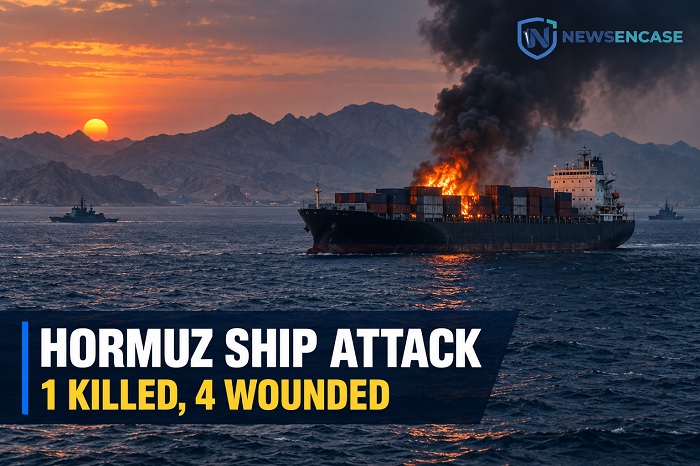
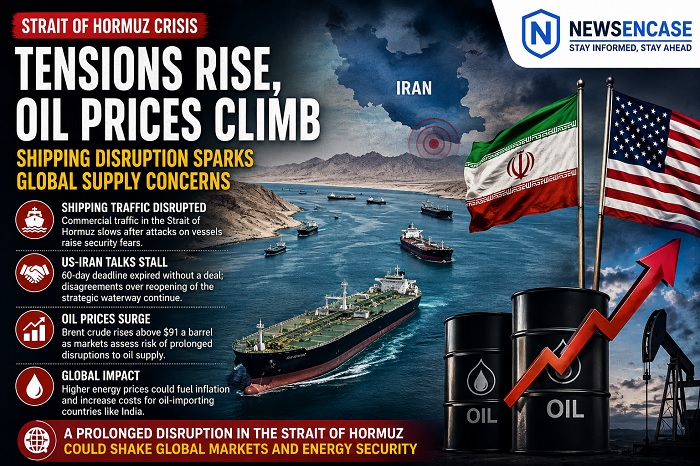
Commercial traffic through the Strait has slowed sharply amid security concerns. On August 14, reports indicated that transit had approached a near standstill after two additional vessels were attacked. The United Arab Emirates also reported attacks involving vessels transiting the waterway. The deteriorating security situation has prompted shipping companies and insurers to reassess the risks of operating in the region.
The crisis has also increased uncertainty for oil tankers carrying crude from major Gulf producers. Although some vessels have continued to move through the region, traffic levels remain far below normal, with operators facing increased security and insurance risks.
US-Iran Talks Face Setback
The latest escalation comes as efforts to reach a broader US-Iran agreement have failed to produce a breakthrough. The 60-day deadline associated with the June peace arrangement expired without a final settlement, while key disagreements over the reopening and management of the Strait of Hormuz remain unresolved.
Iran has indicated that it could adopt a more aggressive military posture if diplomacy fails. At the same time, US President Donald Trump has ruled out extending the existing ceasefire arrangement and has continued to demand changes in Iran’s position on the waterway.
Oman has emerged as an important diplomatic channel, with discussions reportedly focused on arrangements that could facilitate the reopening of shipping through the Strait. However, disagreements between Washington and Tehran continue to complicate those efforts.
Oil Prices Rise Above $90
The uncertainty has already affected global crude markets. On August 18, Brent crude rose to around $91.76 a barrel, while US West Texas Intermediate crude climbed to approximately $85.55 a barrel. Both benchmarks reached their highest levels in several weeks as investors assessed the possibility of prolonged disruptions to energy supplies.
Analysts are watching the Strait closely because an extended disruption could increase transportation costs, tighten oil availability and add inflationary pressure in economies dependent on imported energy.
For countries such as India, which relies significantly on imported crude oil, sustained volatility in global energy prices could affect fuel costs, transportation expenses and broader inflation. The situation is therefore being closely monitored by governments, energy companies and financial markets.
The immediate outlook remains uncertain. A diplomatic agreement that restores safe commercial navigation could ease pressure on oil prices and shipping markets. However, further attacks or a prolonged US-Iran confrontation could deepen the disruption and create wider consequences for global trade and energy security.
About the Author