
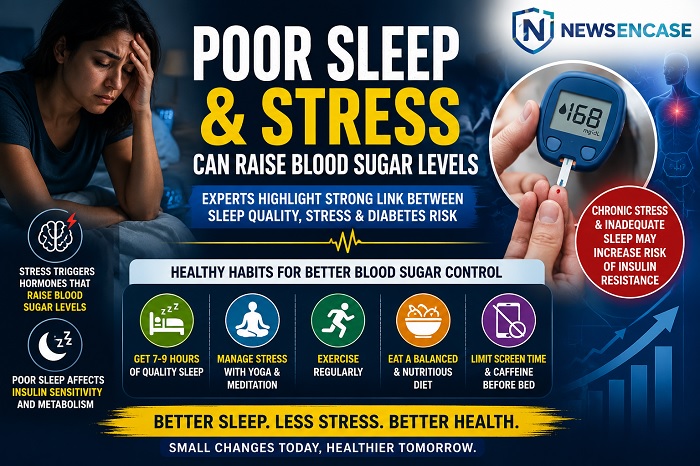
Health experts say poor sleep and chronic stress can increase blood sugar levels and insulin resistance, making diabetes management more difficult. Lifestyle changes, quality sleep, and stress management can help improve overall health.
New Delhi: Health experts are urging people to prioritize quality sleep and stress management, warning that chronic stress and inadequate sleep can significantly affect blood sugar control and increase the risk of developing type 2 diabetes.
Medical professionals say that poor sleep patterns and prolonged stress may reduce the body’s ability to use insulin effectively, leading to insulin resistance and making diabetes management more challenging for those already living with the condition.
How Sleep Affects Blood Sugar
According to health experts, adults who regularly sleep less than the recommended 7–9 hours may experience hormonal changes that affect glucose metabolism.
Lack of sleep can:
- Increase blood sugar levels.
- Reduce insulin sensitivity.
- Trigger cravings for sugary and high-calorie foods.
- Increase the risk of obesity and type 2 diabetes.
- Affect overall energy levels and mental well-being.
Stress Also Plays a Major Role
Chronic stress causes the body to release hormones such as cortisol and adrenaline, which can temporarily increase blood glucose levels. Over time, prolonged stress may contribute to insulin resistance and make it harder to maintain healthy blood sugar levels.
Experts recommend adopting healthy stress-management techniques such as meditation, yoga, regular physical activity, and mindfulness to support overall metabolic health.
Healthy Lifestyle Habits Can Make a Difference
Doctors advise that simple lifestyle changes can help improve both sleep quality and blood sugar management, including:
- Maintaining a consistent sleep schedule.
- Exercising regularly.
- Eating a balanced, nutrient-rich diet.
- Limiting caffeine and screen time before bedtime.
- Practising relaxation techniques to reduce stress.
Health experts emphasize that combining quality sleep, stress management, and regular physical activity can significantly reduce the risk of lifestyle-related diseases while improving long-term health and overall well-being.
About the Author


