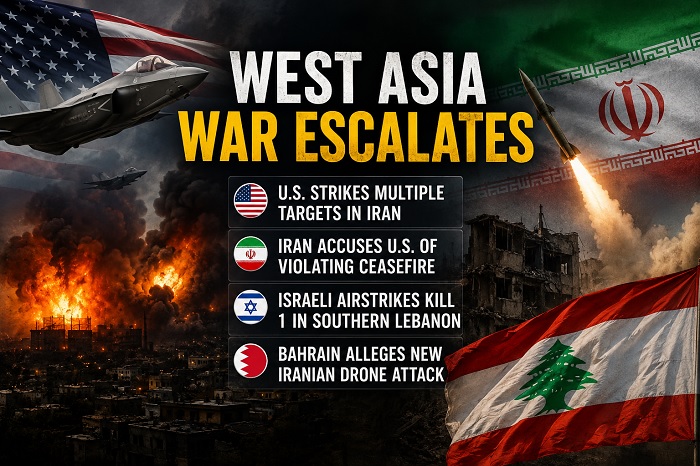
The United States has carried out another round of military strikes against multiple targets in Iran, intensifying tensions despite a recent agreement aimed at ending hostilities between the two countries.
According to the U.S. Central Command, the latest strikes targeted military surveillance infrastructure and other strategic locations inside Iran on Sunday. The operation comes after Tehran accused Washington of violating the ceasefire agreement by launching attacks on Iranian territory.
Iran responded by condemning the U.S. action, claiming the strikes breached commitments made under the recent peace framework. Tehran also reiterated that it had retaliated by targeting U.S. military assets in the Gulf region, raising fears of another cycle of escalation.
Lebanon Seeks U.S. Support
Lebanese President Joseph Aoun held talks with U.S. President Donald Trump, urging Washington to help enforce the framework agreement with Israel. Aoun called on the United States to pressure Israel to withdraw from occupied areas in southern Lebanon and ensure all parties comply with the agreed commitments.
Israeli Airstrikes Continue
Meanwhile, Israeli forces carried out fresh airstrikes on the southern Lebanese town of Nabatieh al-Fawqa. Lebanon’s Health Ministry said one person was killed and two others were injured after drones and warplanes struck the area. The attack adds to concerns that violence could spill over despite diplomatic efforts to stabilize the region.
Bahrain Alleges New Iranian Drone Attack
Bahrain has accused Iran of launching another drone attack targeting the Gulf island nation on Saturday. Iranian officials have not accepted the allegation, while regional tensions remain high following exchanges involving Iran, the United States, Israel, and allied groups.
Latest Situation
Diplomatic efforts continue as regional and international leaders push to prevent a broader conflict. However, the renewed U.S. strikes, continued Israeli military operations in Lebanon, and fresh allegations involving Bahrain indicate that the security situation across West Asia remains highly volatile.
Global markets and governments are closely monitoring developments, with concerns focused on regional stability, energy supplies, and the possibility of further military escalation.
About the Author