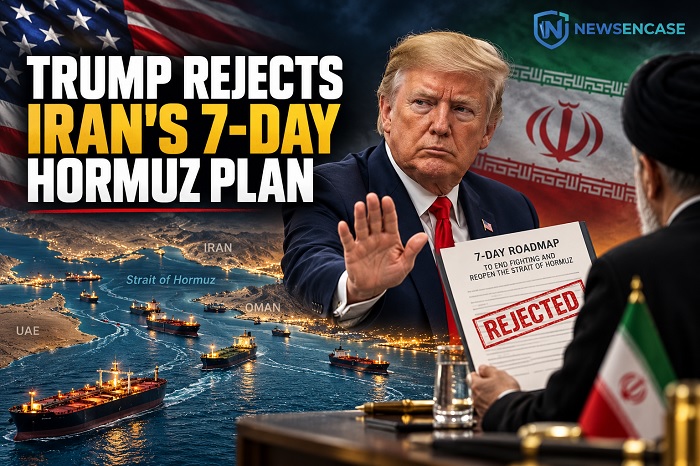
Donald Trump has rejected Iran’s seven-day proposal to reopen the Strait of Hormuz, end regional fighting and restart negotiations with Washington.
US President Donald Trump has rejected Iran’s proposal to end regional fighting and reopen the Strait of Hormuz within seven days, dealing a setback to diplomatic efforts aimed at resolving the nearly seven-month conflict.
Iran presented the roadmap during the United Nations General Assembly in New York and transmitted it to Washington through Qatari mediators. Trump confirmed his rejection while speaking to reporters outside the White House, arguing that Tehran was seeking an agreement because of mounting economic pressure.
What Iran Proposed
Under Tehran’s plan, the United States would lift its naval blockade of Iranian ports, ease restrictions on Iranian oil exports and support the release of frozen Iranian assets.
In exchange, Iran would restore normal maritime passage through the Strait of Hormuz within seven days and participate in a wider ceasefire covering regional hostilities. The proposal could also have opened the way for broader negotiations, potentially including Iran’s nuclear programme.
Iranian Foreign Minister Abbas Araghchi said the plan was ready to be implemented if Washington accepted Tehran’s conditions. Following Trump’s public remarks, however, Araghchi said Iran had not yet received a formal response through the mediators and would wait for Washington’s definitive position.
Strait Remains Central to Conflict
The Strait of Hormuz is a crucial passage for global oil and gas shipments. Disruption to commercial traffic has increased energy-market uncertainty and affected economies dependent on Gulf supplies.
Washington has imposed an economic blockade on Iran, while Tehran has restricted navigation through the strait. Both sides have attempted to use their respective pressure points as leverage: the US through sanctions and maritime restrictions, and Iran through its influence over the strategic waterway.
Diplomats had explored a phased settlement in which Iran would reopen Hormuz as the US gradually eased its blockade. Those discussions were complicated by disagreements over sanctions relief, Iranian control of the waterway and possible nuclear concessions.
Trump has said he remains interested in reaching an agreement but considers the current Iranian offer unacceptable. Reports that he may consider renewed strikes after the US midterm elections have increased fears of another escalation, although no new military campaign has been formally announced.
About the Author