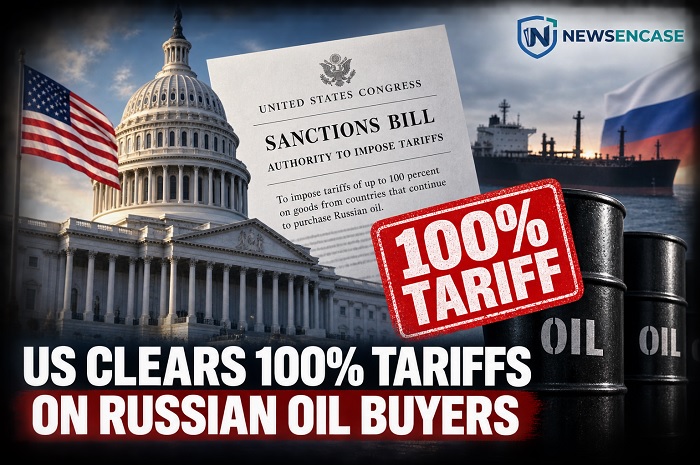
The US Congress has passed a bill allowing President Trump to impose tariffs of up to 100% on major buyers of Russian oil and gas, potentially affecting India and China.
The US Congress has passed legislation allowing President Donald Trump to impose tariffs of up to 100% on countries that continue buying Russian oil and natural gas.
The House of Representatives approved the Lindsey O. Graham Sanctioning Russia and Iran Act of 2026 by 262 votes to 159 on September 16. The Senate had earlier passed the legislation by an 86–11 vote.
The bill will become law after receiving Trump’s signature. The US president has expressed support for the measure and is expected to approve it, according to Reuters.
Are 100% Tariffs Automatic?
The bill does not automatically impose a 100% tariff on every country purchasing Russian energy.
Instead, it authorises the president to levy targeted duties of up to 100% on:
- The five largest importers of Russian-origin crude oil.
- The five largest buyers of Russian natural gas.
- Five countries found to be helping Moscow evade energy sanctions.
The administration will decide which countries face penalties, the tariff rate and when the measures take effect. The legislation also allows exemptions or waivers when the president considers them necessary for US national interests.
India and China Could Face Tariff Risk
India and China are among Russia’s largest energy customers and could potentially be targeted under the new framework.
India significantly increased its purchases of discounted Russian crude following Moscow’s invasion of Ukraine in 2022. The supplies have helped Indian refiners control costs during periods of volatility in international energy markets.
A 100% tariff on Indian products would make affected exports considerably more expensive in the US market. Textiles, pharmaceuticals, engineering goods, chemicals, electronics, gems and jewellery could face pressure depending on how broadly the duties are applied.
The measure could also complicate trade negotiations between New Delhi and Washington.
India Defends Its Energy Security
India has reiterated that its energy-purchasing decisions are based on national interests, affordability and market conditions.
The Ministry of External Affairs said the government remains committed to securing stable and reasonably priced energy for the country’s 1.4 billion people. New Delhi has also cautioned that punitive measures could harm bilateral relations and create further uncertainty in global oil markets.
India is expected to seek exemptions, phased implementation or other safeguards before the Trump administration activates any tariffs. Indian refiners are also monitoring whether the measure affects future Russian crude contracts, Reuters reported.
Bill Targets Russia’s Wider Sanctions Network
The legislation goes beyond tariffs on energy buyers. It authorises new sanctions against Russian officials, oligarchs, banks and foreign entities accused of supporting Moscow’s war in Ukraine.
It also targets Russia’s “shadow fleet”—tankers used to transport oil while avoiding Western sanctions, price restrictions and conventional shipping services.
A separate provision extends the Iran Sanctions Act for five years, shifting its expiry from 2026 to 2031.
Supporters argue that the bill will reduce the energy revenue available to finance Russia’s war. Critics say it grants the president excessive trade powers and could damage US relations with allies and strategic partners.
The immediate impact will depend on when Trump signs the legislation and how his administration uses the new tariff authority.
About the Author