
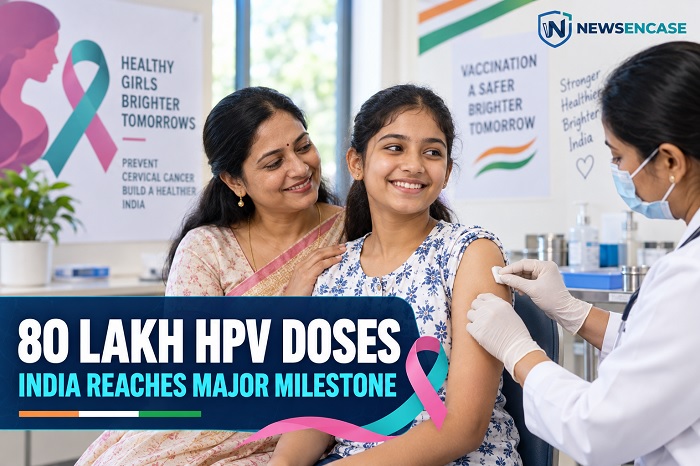
India has administered more than 80 lakh—or eight million—Human Papillomavirus vaccine doses under its nationwide campaign to protect adolescent girls from cervical cancer, the Union Health Ministry announced.
The National HPV Vaccination Campaign was launched by Prime Minister Narendra Modi on February 28, 2026. It offers a free, voluntary, single-dose HPV vaccine to 14-year-old girls at designated government health facilities across all states and Union Territories. Parental consent is mandatory before vaccination.
The government estimates that approximately 1.2 crore girls form India’s annual cohort of 14-year-olds eligible to benefit from the programme.
Uttar Pradesh Leads Vaccination Numbers
According to the Health Ministry, Gujarat, Uttar Pradesh, Madhya Pradesh and Mizoram have achieved 100% coverage of their identified target groups. Bihar, Andhra Pradesh and Assam have crossed 90%, while Karnataka has vaccinated more than 85% of its targeted beneficiaries.
Chhattisgarh, Sikkim, Kerala, Telangana and Odisha have reported coverage above 60%. Uttar Pradesh recorded the highest absolute number, with more than 22 lakh adolescent girls vaccinated.
State governments have used community mobilisation and local health networks to reach eligible girls in urban, rural, remote and geographically challenging areas. Paediatricians, gynaecologists, teachers, ASHA workers and auxiliary nurse midwives have supported awareness programmes and helped address parental concerns.
The U-WIN digital platform is being used to monitor district-level coverage, identify missed beneficiaries and help programme managers plan follow-up vaccination sessions.
Focus on Cervical Cancer Prevention
Persistent infection with high-risk HPV strains—particularly types 16 and 18—is the principal cause of cervical cancer. Government data citing the WHO’s GLOBOCAN 2022 estimates indicate that India records more than 1.2 lakh new cervical cancer cases and nearly 80,000 deaths annually.
The vaccination programme forms part of a broader cervical-cancer prevention strategy that also includes screening, early diagnosis and timely treatment.
All vaccination sessions are conducted under the supervision of trained medical officers. Vaccination centres are linked to round-the-clock healthcare facilities for the assessment and management of rare adverse events following immunisation.
Although the initial drive was introduced in campaign mode, the HPV vaccine will continue to be available during routine immunisation sessions at government health facilities. Authorities are now focusing on reaching the remaining eligible beneficiaries as the campaign moves into its final phase.
About the Author