
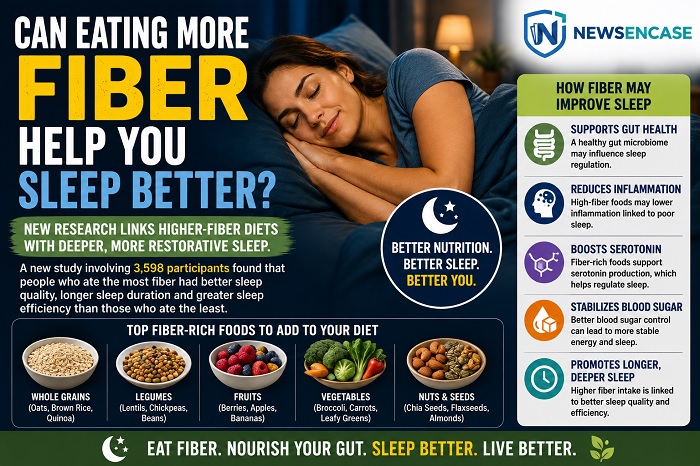
Eating more fiber-rich foods may influence how well you sleep that very night, according to new research that strengthens the emerging connection between diet and sleep quality.
A study published in Nature Health on August 19, 2026 analyzed 4,793 person-nights from 3,598 adults, combining real-time dietary records with wearable sleep measurements. Researchers found that days with higher fiber intake were associated with more deep and REM sleep, less light sleep and a lower sleeping heart rate.
Higher Fiber Linked to More Restorative Sleep
The researchers examined how day-to-day changes in diet were related to sleep that same night.
On higher-fiber days, participants recorded an average 0.59 percentage-point increase in deep sleep and a 0.76 percentage-point increase in REM sleep. At the same time, light sleep decreased by approximately 1.35 percentage points.
The changes may sound relatively small, but researchers detected them objectively across thousands of nights, suggesting everyday food choices could have measurable links with sleep architecture.
Sleeping Heart Rate Also Fell
Higher fiber density was also associated with an average 1.14-beats-per-minute lower nighttime heart rate.
A lower sleeping heart rate can be an indicator of greater autonomic relaxation and overnight recovery, although it should not be interpreted as a standalone measure of sleep quality or cardiovascular health.
Plant-Rich Diets Show Additional Benefits
Fiber wasn’t the only dietary characteristic associated with nighttime physiology.
People who consumed a greater variety of plant foods and a higher proportion of whole-plant foods also tended to have lower nocturnal heart rates. Greater plant diversity was additionally associated with slightly shorter sleep-onset time.
That makes foods such as vegetables, fruits, beans, lentils, whole grains, nuts and seeds particularly interesting for researchers studying the diet-sleep relationship.
What Does the Gut Have to Do With Sleep?
One possible explanation involves the gut microbiome.
Dietary fiber feeds certain beneficial gut microbes, which produce compounds involved in metabolic and immune processes. Scientists are increasingly investigating whether communication along the gut-brain axis could influence sleep and circadian biology.
However, the new study did not establish that changes in gut bacteria were responsible for the observed sleep differences, so that mechanism remains an area for further research.
Does More Fiber Guarantee Better Sleep?
No. The research was conducted under real-world observational conditions and cannot prove that eating additional fiber directly causes deeper sleep.
Sleep is affected by numerous factors, including stress, physical activity, caffeine, alcohol, medications, health conditions, light exposure and bedtime habits.
The study also found that short-term differences in overall macronutrient distribution and micronutrient intake did not show robust associations with sleep after statistical correction.
Diet Could Become Another Piece of the Sleep Puzzle
The findings nevertheless provide new evidence that nutrition may influence sleep on a much shorter timescale than previously appreciated.
Instead of viewing diet only as something that affects health over months or years, researchers found that what people ate during one day was associated with measurable differences in their sleep that night.
The practical takeaway isn’t to treat fiber as a sleeping pill. Instead, a diet naturally rich in whole grains, vegetables, fruits, legumes, nuts and seeds may support overall health while potentially contributing to more restorative sleep.
About the Author