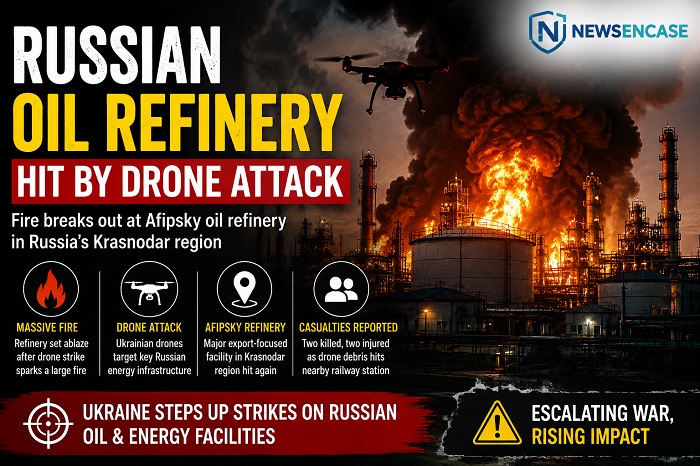
A drone attack sparked a fire at Russia’s Afipsky oil refinery in the southern Krasnodar region, as strikes against Moscow’s energy infrastructure continue to intensify. Regional Governor Veniamin Kondratyev confirmed the attack, which took place on August 25, 2026.
Two Killed Near Afipsky Refinery
Russian authorities said falling drone debris struck the nearby Afipsky railway station, killing two people and injuring two others. The refinery itself caught fire following the attack, according to the regional governor.
At least 10 private homes in Afipsky were also reported damaged during the overnight attack.
Major Russian Oil Facility Targeted
The Afipsky refinery is an important component of Russia’s southern energy infrastructure and is primarily export-focused. It processed approximately 7.2 million metric tonnes of crude oil in 2024, equivalent to around 144,000 barrels per day.
The facility has been targeted repeatedly by drones in recent months, highlighting the vulnerability of Russian energy infrastructure as the war continues.
Ukraine Intensifies Attacks on Russian Energy
Ukraine has stepped up strikes against Russian oil refineries, terminals and other energy facilities, saying the attacks are intended to undermine infrastructure supporting Moscow’s military operations and reduce energy revenues available to Russia.
The Afipsky incident follows several other attacks on Russian refining infrastructure. On August 21, operations at the Perm refinery—Russia’s seventh-largest oil-processing plant by volume—were halted after a Ukrainian drone attack caused a fire and damaged processing units, according to industry sources cited by Reuters.
Ukraine’s military also said it struck the TANECO refinery in Tatarstan and the Tamanneftegaz oil terminal in Krasnodar in attacks reported on August 20.
Russia Moves to Protect Critical Infrastructure
The mounting attacks have prompted Moscow to take additional measures. President Vladimir Putin recently signed a decree allowing the Russian state to temporarily take control of critical infrastructure if operators fail to adequately protect facilities or carry out repairs following attacks. The measure covers energy, industrial, transport, communications and logistics assets.
The strikes are also contributing to pressure on Russia’s domestic fuel market. Reuters reported last week that some Moscow fuel stations had introduced gasoline sales limits amid shortages linked partly to refinery attacks and seasonal demand.
The latest Afipsky attack therefore represents more than an isolated refinery fire. It forms part of an escalating campaign against Russia’s economically and strategically important energy network, with potential consequences for fuel supplies, export revenues and the wider Russia-Ukraine war.
About the Author