
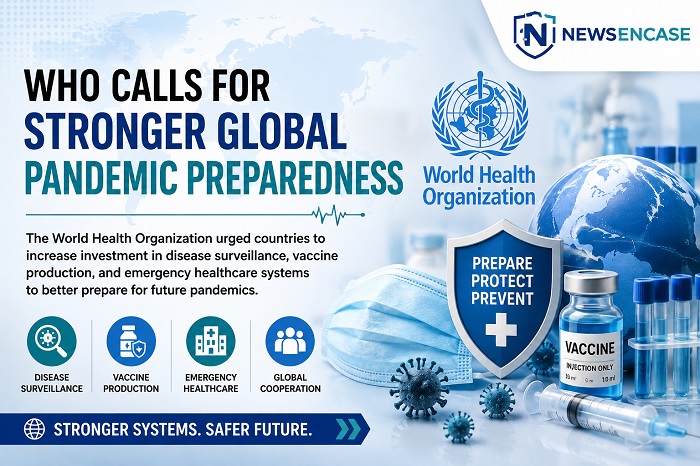
The World Health Organization has urged countries to strengthen pandemic preparedness by investing in disease surveillance, vaccine production, emergency healthcare systems, and international cooperation to tackle future global health threats.
Geneva: The World Health Organization (WHO) has called on governments worldwide to significantly strengthen their pandemic preparedness by investing in disease surveillance, vaccine manufacturing, emergency healthcare infrastructure, and rapid response systems. The appeal comes as health experts continue to assess lessons learned from recent global outbreaks and emerging infectious disease threats.
WHO officials stressed that countries must remain vigilant despite the decline in large-scale public health emergencies. They emphasized that stronger healthcare systems, faster detection of infectious diseases, and coordinated international action are essential to preventing future pandemics from escalating into global crises.
The organization recommended expanding real-time disease surveillance networks, improving laboratory capacity, increasing healthcare workforce training, and strengthening emergency medical supply chains. WHO also urged governments to invest in domestic and regional vaccine manufacturing to ensure equitable access to vaccines during future health emergencies.
Public health experts noted that climate change, rapid urbanization, increased international travel, and the emergence of new infectious diseases continue to raise the risk of future outbreaks. Strengthening early warning systems and promoting transparent data sharing between countries will be critical for detecting and containing diseases before they spread globally.
The WHO further highlighted the importance of sustained funding for public health research, digital health technologies, and pandemic preparedness plans. It encouraged countries to regularly conduct emergency response drills and update national preparedness strategies based on evolving scientific evidence.
Global health leaders believe that stronger international cooperation will play a vital role in responding to future health crises. They urged governments, research institutions, and healthcare organizations to work together to build resilient health systems capable of protecting lives and minimizing the economic and social impact of future pandemics.
The renewed call reinforces the WHO’s commitment to helping nations improve preparedness and ensure the world is better equipped to respond swiftly to future public health emergencies.
About the Author