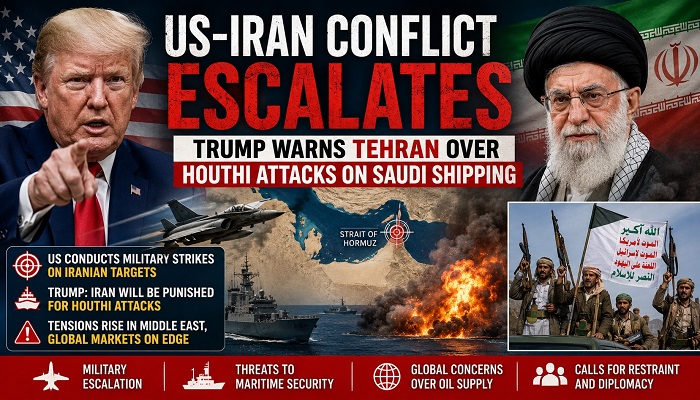
The US-Iran conflict has intensified after fresh American strikes on Iranian targets. President Donald Trump warned Tehran of severe consequences over Houthi attacks on Saudi-linked shipping, raising fears of wider regional escalation.
Washington/Tehran: Tensions in the Middle East have intensified sharply after the United States launched fresh military strikes on Iranian targets while President Donald Trump warned that Iran would face severe consequences for attacks carried out by Yemen’s Houthi rebels against Saudi-linked commercial shipping.
According to U.S. military officials, the latest strikes targeted Iranian military infrastructure, including coastal surveillance systems, air defence facilities, and assets linked to the Islamic Revolutionary Guard Corps (IRGC). The operation followed a series of escalating attacks in the region, including the deaths of American service members in Jordan and continued threats to maritime security in the Gulf.
President Trump said Iran would be held directly responsible for any Houthi attacks on Saudi commercial vessels or critical shipping routes, warning that Tehran would face swift retaliation if such incidents continue. The statement signals a further hardening of Washington’s stance toward Iran as regional tensions continue to mount.
Meanwhile, Iran has strongly condemned the U.S. strikes, calling them a violation of international law and reaffirming its right to defend its sovereignty. Iranian authorities also accused Washington of destabilizing the region through continued military action and support for its allies.
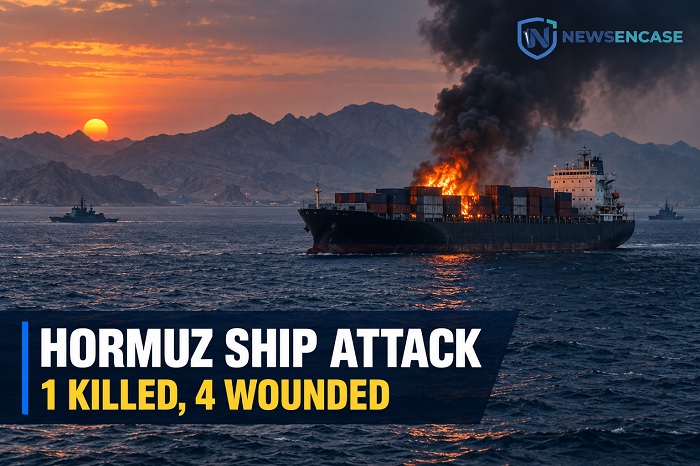
The Strait of Hormuz remains at the center of the crisis, with global markets closely monitoring developments due to the waterway’s importance for international oil exports. Security concerns have increased as military activity expands across the Gulf, raising fears of disruptions to global energy supplies and commercial shipping.
Regional governments have also stepped up security measures following reports of drone and missile activity involving Iranian-backed groups. The latest developments have heightened concerns that the conflict could spread beyond Iran and Israel, drawing additional countries into the confrontation.
International leaders have renewed calls for restraint and diplomatic engagement to prevent a wider regional war. The United Nations and several global powers have urged all parties to avoid further escalation and prioritize dialogue amid growing humanitarian and economic concerns.
With military operations continuing and diplomatic efforts under strain, the Middle East remains on high alert as the confrontation between the United States and Iran enters another dangerous phase.
About the Author